
When your boiler suddenly stops working and a fault code appears on the display, it’s easy to feel worried or unsure what to do next. However, in many cases, the fault code is simply your boiler’s way of alerting you to a straightforward issue that you can often check and fix yourself before needing to call an engineer. Understanding these codes can save you time and money and help you get your heating back on quickly and safely.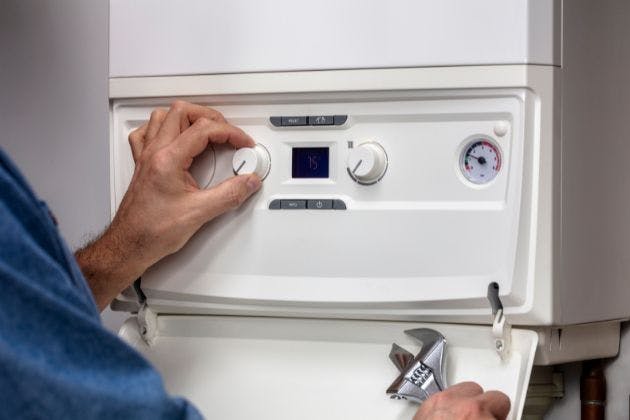
What a boiler fault code actually is
A boiler fault code is a short combination of letters and numbers that tells you what type of problem the boiler has detected. The code helps engineers find the fault more quickly, and it can guide you to basic checks.
Each manufacturer uses its own list of codes, and even models from the same brand can use different numbers for similar issues. That is why you should always compare the code on your boiler with the table in your user manual or the official website.
Think of the code as a clue, not a full diagnosis. It can suggest a blocked condensate pipe, low pressure, ignition issues or sensor faults, but it rarely tells the full story on its own.
Key safety rules before you touch anything
Before you try any checks, it is important to stay within what is safe and legal to do as a homeowner. Many parts of a boiler must only be worked on by a Gas Safe registered engineer.
Never remove the boiler casing or tamper with gas components
Always follow the instructions in your boiler’s user manual
Turn the boiler off at the mains if you notice burning smells, a gas smell or water leaking inside the casing
Call a Gas Safe engineer for any work on gas pipes, burners, flues or internal parts
The checks below are surface-level and designed to be safe. If you are ever unsure, do not proceed and contact a professional.
Universal checks you can usually do safely
Many fault codes turn out to be related to settings, controls or simple conditions around the boiler. These are common checks most homeowners can carry out without tools.
Room thermostat settings
Make sure your room thermostat is turned up higher than the current room temperature and that it is calling for heat. If it has batteries, replace them if the display is faint or blank.
Check that any smart thermostat app shows the system as "online" and connected. A communication issue can stop the boiler even if everything else looks fine.
Programmer or timer
Look at your heating programmer or timer to confirm the heating and hot water are actually turned on. Sometimes clocks reset after a power cut and schedules disappear.
Try setting the heating to "constant" or "on" instead of "auto" as a test. If the boiler runs in this mode, the issue may be with your timings rather than the boiler itself.
Boiler pressure gauge
Most modern systems and combi boilers have a pressure gauge on the front. When the system is cold, this usually sits around 1.0 to 1.5 bar. If it is close to zero, low pressure can trigger fault codes and stop the boiler.
Your manual will explain the correct range and how to top up pressure safely using the filling loop. If the pressure keeps dropping, that points to a deeper issue. You can read more in our detailed guide on pressure dropping.
Condensate pipe outside
Condensing boilers produce a small amount of wastewater that runs outside through a plastic condensate pipe. In cold weather, this pipe can freeze, causing a blockage and a fault code or lockout.
If you suspect a frozen pipe, feel along the outside section. If it is icy or you can see a blockage, you may be able to gently thaw it with warm (not boiling) water poured over the pipe. For step-by-step advice, see our frozen condensate guide.
Radiator valves and TRVs
If certain rooms are cold or the boiler fires briefly, then stops, check that the radiator valves are open. Thermostatic radiator valves can sometimes stick in the closed position after summer.
Gently try turning the valve head up and down. If it does not move or the radiator stays cold while others heat up, mention this to your engineer when you book a visit.
Power supply to the boiler
Check that the boiler’s fused spur switch nearby is turned on and that the fuse has not blown. Confirm that the main consumer unit has not tripped the circuit for the boiler.
If the display is completely blank and you have power to other devices on the same circuit, you may need an engineer to test the boiler’s internal electrics.
Common boiler brands and typical code themes
No guide can list every code for every boiler, and you should always cross-check with the manual. However, many brands use groups of codes that tend to relate to similar issues.
Ideal boilers
Ideal often uses "F" codes for faults. For example, F1 and related codes can indicate low water pressure, while some F2 or F3 style codes may relate to ignition or flame detection problems.
Some "L" codes can point to lockouts after repeated failed starts. If you see these regularly, note the code and call an engineer rather than constantly resetting.
Worcester Bosch
Worcester Bosch models frequently use EA, CE or E followed by numbers for error conditions. EA codes often involve ignition faults or lack of flame detection.
Codes mentioning "reset" may clear after addressing simple issues like gas supply interruptions, but repeated reappearance is a sign for professional attention.
Vaillant boilers
Vaillant tends to group issues into F and S ranges. F codes can point toward faults such as flame failure, temperature sensor issues or air/flue problems.
S codes may indicate status rather than full faults, for example waiting for a demand signal. If you see an S code, check your controls and thermostats before assuming a breakdown.
Baxi and Main
Baxi and related brands often show fault codes that relate to ignition, fan, overheat, sensor or pressure issues. Some models also display lights in patterns instead of full codes.
If your Baxi boiler shows pressure-related codes and the gauge is low, topping up to the recommended level may help. If the code relates to temperature or overheating, leave the boiler off and call an engineer.
When a boiler fault code means stop and call
Some situations should never be treated as simple reset-and-forget issues. In these cases, do not try to keep the boiler running and seek help straight away.
Repeated lockouts or the same code returning after resetting
Any sign of water leaking from inside the boiler casing or flue
Smell of gas anywhere near the boiler or gas meter
Carbon monoxide alarm sounding or showing elevated levels
Visible scorch marks, burning smells or sooty deposits
Turn the boiler off at the mains and, in the case of a gas smell, follow gas emergency advice immediately. For leaks from visible pipework, place a container under the drip and arrange a repair. For more on this topic, see our guide to boiler leaking.
Safe next steps and getting expert help
If your checks do not clear the fault code, or if you are not comfortable attempting them, it is time to bring in a professional. Make a note of the exact code, when it appears and anything you have already tried.
A Gas Safe registered engineer can read the fault history, test components and repair or replace parts safely. Trying to open the casing or guess at internal adjustments can be dangerous and may void warranties or insurance.
If you have got a fault code and no heat, book a boiler repair with a qualified engineer. To arrange a local visit, contact Whittaker Plumbing & Heating Ltd on 07772222848, and we will help get your home warm again as safely and quickly as possible.
EndFragment