
Finding a puddle under your boiler is worrying, especially if you’re unsure how serious the problem is. Acting quickly can protect your home from water damage, reduce the risk of electrical hazards, and prevent the issue from getting worse. It also helps your Gas Safe engineer diagnose and fix the fault more efficiently, saving you time and stress. Always prioritise safety by turning off the boiler and avoiding contact with any water near electrical components.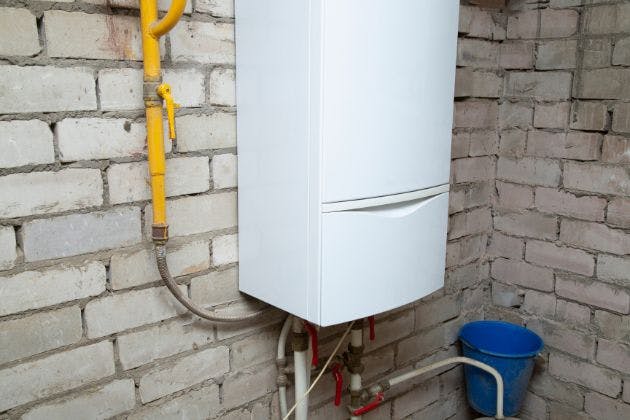
First steps if your boiler is leaking underneath
Start by switching the boiler off at the boiler controls, then turn off the main power to the boiler at the fused spur switch next to it. Do not ignore any smell of burning, scorched marks or buzzing from the boiler or nearby wiring.
Look for any water getting near electrical parts such as the boiler plug, spur or nearby socket. If you can see water tracking towards electrics, turn the power off at the consumer unit and avoid touching anything wet.
If the leak is more than a slow drip or water is spreading across the floor, it is sensible to turn off the cold water feed to the boiler or your internal stop tap. This helps limit damage until the fault can be found.
Quick checks to limit damage
Once the boiler and power are safely off, mop up as much water as you can and put a tray or shallow container under the boiler to catch further drips. Move soft furnishings or anything easily damaged by damp out of the way.
If the leak is upstairs, look at the ceiling below for any staining or bulging. Any sign of bowing or sagging plaster needs urgent attention as it can weaken the ceiling structure.
Turn boiler controls and fused spur off
Keep water away from sockets and cables
Contain drips with a tray or towels
Shut off water feed if the leak is heavy
Main causes of water under a boiler
Several different components can lead to a leak under the boiler. Some issues are minor, while others signal wear, corrosion or high pressure inside the system. A Gas Safe engineer can confirm the exact cause, but it helps to understand the likely culprits.
Pressure relief valve discharging
The pressure relief valve is a built-in safety device that lets water escape if your boiler pressure rises too high. If the system has been overfilled or there is a problem with the filling loop or expansion vessel, the valve may drip or run constantly.
You will usually see water outside from the copper pressure relief pipe, but if it runs down the wall it can appear as a leak from underneath the boiler. If the valve has been lifting frequently, it can start to leak even at normal pressures.
Leaking condensate trap or pipe
Modern condensing boilers produce condensate, a slightly acidic water that runs through a plastic trap and pipe to a drain. If the trap becomes blocked or the pipe is cracked, loose or frozen in winter, condensate can spill into the bottom of the boiler casing.
This often shows as a steady drip, sometimes linked to when the boiler fires up. Any white, chalky limescale marks around joints can suggest a longer-term condensate weep, especially in harder water areas.
Pump seals and internal joints
Many boilers have the circulation pump mounted inside the casing. Over time, the pump seals or connections can wear, allowing small leaks that run down internal pipework and drip from the underside.
Loose compression joints, poorly seated washers or perished O-rings on other internal components can cause similar symptoms. These leaks often start small and may only appear when the system is hot.
Corroded heat exchanger
A failing heat exchanger can leak within the main sealed part of the boiler. Corrosion, movement or limescale build-up can eventually lead to cracks or pinholes, and water may escape into the casing and out underneath.
These faults are usually more serious and sometimes come with other signs such as strange noises, repeated pressure loss or visible rust stains inside the boiler.
External pipework and valves
Not every leak under the boiler is from inside the appliance. Nearby pipework, isolation valves or fittings can drip and run along pipes until it looks like the boiler is at fault.
If you have recently had work done on the heating system, a slightly loose joint or valve around the boiler is a common cause of fresh leaks.
Checks you can do safely as a homeowner
There are a few simple observations you can make that help narrow things down, without taking covers off or touching gas parts. Never remove the boiler case or attempt repairs yourself if it affects gas or combustion components.
First, look at your system pressure gauge with the boiler off and cooled. If the pressure is very low or keeps dropping after you top it up, the leak may be from the system pipework, radiators or an internal component that only shows when hot.
Next, check around all visible pipes and valves under the boiler with a dry piece of kitchen roll. Wipe along each joint and see where it first becomes wet. This can tell your engineer whether the leak is from the boiler body or nearby pipework.
Finally, note when the leak is worse. Is it only when the heating is on, when you run hot water, or all the time? This timing is extremely useful for diagnosis.
Jobs that need a Gas Safe engineer
Anything involving removing the boiler casing, touching gas components or altering safety devices must be handled by a Gas Safe registered engineer. This includes work on the heat exchanger, gas valve, burner and flue connections.
Adjusting, replacing or capping the pressure relief valve, working on internal pumps, refitting the condensate trap and checking the sealed combustion chamber also fall into this category. Attempting these repairs yourself can be dangerous and may void your boiler warranty.
If you are also seeing a pressure dropping issue, repeated lockouts or new fault codes on the boiler display, it is especially important to get professional help promptly. A leak plus a fault code can indicate a developing problem that should not be ignored.
How to document the leak to speed up repairs
Taking a few minutes to record what is happening can save time and return visits. Use your phone to take clear photos of the leak, including close-ups of any visible drips and wider shots showing surrounding pipework.
If your boiler has a digital display, photograph any error or fault code that appears. Note down the exact code and when it showed up. This can link with guidance in boiler fault code articles and help your engineer arrive prepared.
Keep a short log of when the leak happens, how much water you see, and whether the boiler is heating or just providing hot water at the time. Share this with your engineer when you book your boiler repair.
Preventing future leaks with regular servicing
Many leaks start as tiny weeps that go unnoticed until they worsen. An annual boiler service gives a Gas Safe engineer the chance to spot worn seals, early corrosion, blocked condensate traps and pressure issues before they turn into puddles on the floor.
Regular servicing can also pick up related issues such as fluctuating pressure or repeated fault codes that often sit alongside leaks. Addressing these early helps protect your boiler, radiators and the fabric of your home from avoidable damage.
Next steps and getting professional help
If your boiler is leaking water from underneath, turn it off, keep electrics safe and contain the water as best you can. Then document what you see and contact a qualified engineer to track down the exact cause.
For fast, professional boiler repairs, get in touch with Whittaker Plumbing & Heating Ltd on 07772222848. If your boiler is currently working but you want to reduce the risk of leaks, you can also book an annual boiler service with Whittaker Plumbing & Heating Ltd to keep everything running safely and efficiently.
If you are also noticing your boiler pressure dropping regularly or seeing new boiler fault codes on the display, mention this when you call so your engineer can investigate all the symptoms together.